Comparing research platforms
Maze vs. Dscout: Which UX Research Platform Is Right for Your Team?
Compare Maze vs. Dscout across AI, research methods, participant recruitment, integrations, and pricing to choose the right user research platform.


TL;DR
Maze and Dscout are both AI-powered user research platforms, but they’re built for different research workflows. The right tool for you depends on your team and user research needs.
Dscout is best for longitudinal qualitative research, including diary studies, field studies, live interviews, and media-rich feedback. Its native Scout panel is ideal for US and UK participants, while partner panels extend recruitment through third-party providers. Dscout AI Studio supports study drafting, dynamic probing, summaries, theme detection, and repository chat.
Maze is an AI-first user testing platform, with usability testing, surveys, interviews, card sorting, tree testing, live website testing, and mobile testing. Maze panel gives teams access to millions of participants across 130+ countries, with AI-powered tools for study setup, moderation, question quality, analysis, and reporting helping teams reach decision-ready insights faster.
Maze vs. Dscout: Introduction
Choosing the right platform can make all the difference in your user research processes. Maze and Dscout are two leading options, but which is the better fit for your team?
Dscout is a research tool specializing in in-context and diary studies. It’s built for companies that need to capture real-world user behavior through methods such as usability testing, card sorting, and media-rich surveys. The Dscout AI Studio deploys autonomous AI moderators to dynamically probe participants across text and video, aggregates automated thematic insights, and allows researchers to text-query their media repository using natural language.
Maze is an end-to-end platform for unmoderated, moderated, qualitative, and quantitative research. It offers a full suite of testing methods, including prototype testing, live website testing, user interviews, surveys, card sorting, and tree testing. Alongside a comprehensive suite of research tools, Maze also supports teams with participant recruitment and management, AI-powered study builder, AI-moderated interviews, and automated reporting in the research process.
In this Maze and Dscout comparison, we break down how the two tools compare when it comes to:
- AI research capabilities: How does each platform use AI across study creation, moderation, analysis, and reporting?
- Breadth of research methods: Which platform supports more testing methods across discovery, validation, usability testing, and information architecture?
- Participant recruitment: How do Maze and Dscout help teams recruit, screen, and manage the right participants?
- Integrations: Which platform fits better into your existing design, research, and product workflow?
Maze vs. Dscout comparison (from G2 user reviews)
Maze | Dscout | |
|---|---|---|
Overall rating (G2) | 4.5/5 out of 100+ reviews | 4.5/5 out of 180+ reviews |
Ease of setup | 9.5/10 | 8.5/10 |
Ease of use | 8.9/10 | 8.4/10 |
Integrations |
|
|
Best for | Maze is best for continuous product discovery. It helps product and design teams run prototype tests, live website and mobile tests, card sorting, tree testing, and surveys. Automated reports help teams turn participant feedback into stakeholder-ready presentations. | Dscout is best for integrated UX research and evaluative testing, combining its signature longitudinal diary studies and live interviews with quantitative, evaluative tools like card sorting, website intercepts, and unmoderated usability testing. |
AI capabilities | Maze’s research-grade AI helps teams across the research workflow with AI study builder, AI moderator, dynamic follow-up questions, quality checks, transcription clean-up, automated summaries, theme and sentiment analysis, and presentation-ready reports. | Dscout AI acts as an end-to-end research assistant by drafting study screeners, deploying an autonomous AI moderator to dynamically probe participants, and instantly extracting cited video insights through natural language querying. |
Pricing |
|
|
Maze vs. Dscout: Main differences
What really sets Maze and dscout apart for teams doing user research?


AI capabilities across method types

Dscout’s AI Studio deploys an autonomous AI moderator to dynamically probe participants during multi-day video diaries.
Maze has broader AI coverage across more research methods with AI study builder, AI moderator, dynamic follow-up questions, interview analysis, survey theme grouping, sentiment analysis, and AI-generated summaries.

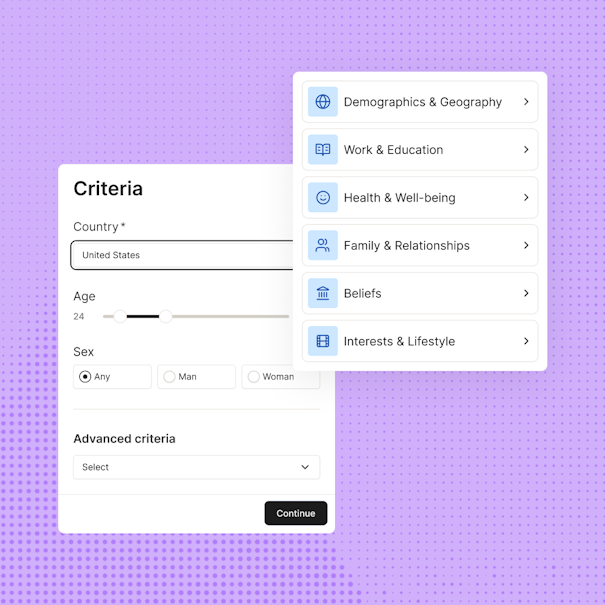
Global recruitment and participant screening
Dscout offers its native Scout Panel, which is highly concentrated in the US. For international participants, the tool connects with partner panels like Respondent, which blocks advanced skip/piping logic and forces single-payout constraints on incentives.
The Maze panel gives you access to a comprehensive pool of participants spanning 130+ countries. Screener blocks inside the study support multiple-choice questions, rejection screens, and reusable templates, so you only pay for qualified participants.


Intuitive research democratization
Dscout gives teams flexibility to tailor studies to their research needs. However, it needs manual configurations, with teams defining research activities and participant journeys themselves.
Maze achieves intuitive democratization by embedding research best practices directly into the user workflow. It provides research teams with governance controls so that any designer or product manager can gather valid, standardized insights independently.
Maze vs. Dscout: Feature comparison
Features

Dscout
Maze
—
—
Google/Outlook Calendar, Exchange, Office 365, iCloud
Google Meet, Zoom
Google/Outlook Calendar, Exchange, Office 365, iCloud
Axure, Figma
Figma
Axure, Figma
Bolt, Figma Make, Lovable, Replit
—
Bolt, Figma Make, Lovable, Replit
Atlassian, FigJam, Miro, Notion, Slack
Only Miro and Slack
Atlassian, FigJam, Miro, Notion, Slack
Google Meet, Microsoft Teams, Zoom
Google Meet, Zoom, Teams
Google Meet, Microsoft Teams, Zoom
Maze vs. Dscout: AI capabilities
Features
Dscout
Maze
—
Dscout AI Studio can help draft questions and screeners, but it doesn’t generate a complete multi-block study structure from a prompt
—
![]()
"Maze takes the guesswork out of understanding user problems, letting you focus on what matters most."
Henrique Johansson Tramontina
Principal Product Designer at Hopper



Why product and design teams are making the switch to Maze

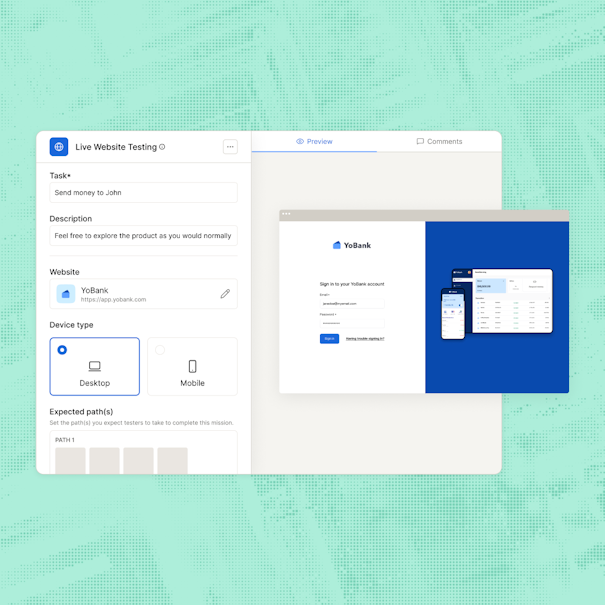
Run research on live flows and experiences
Maze offers a wider range of moderated and unmoderated research tasks for everyday use. You gather both the quantitative behavioral metrics (like heatmaps and misclicks) and qualitative open-ended feedback needed to refine live digital products instantly.

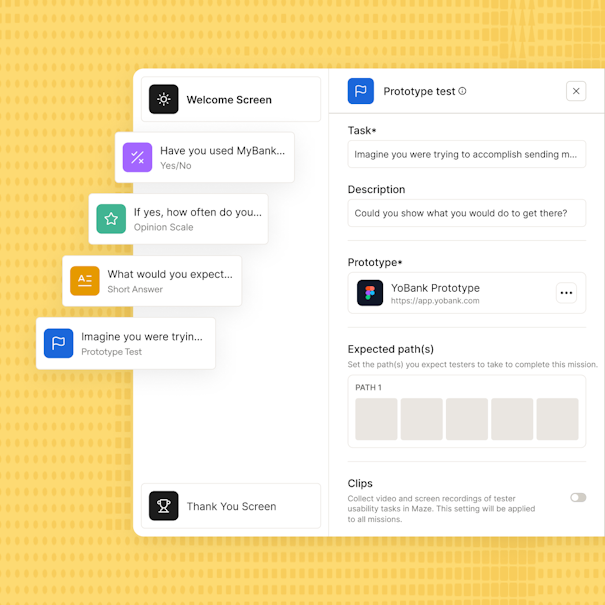
Prototype testing, done right
Maze supports prototype testing with Figma and Axure, as well as AI-generated prototypes built with Figma Make, Lovable, Bolt, and Replit.



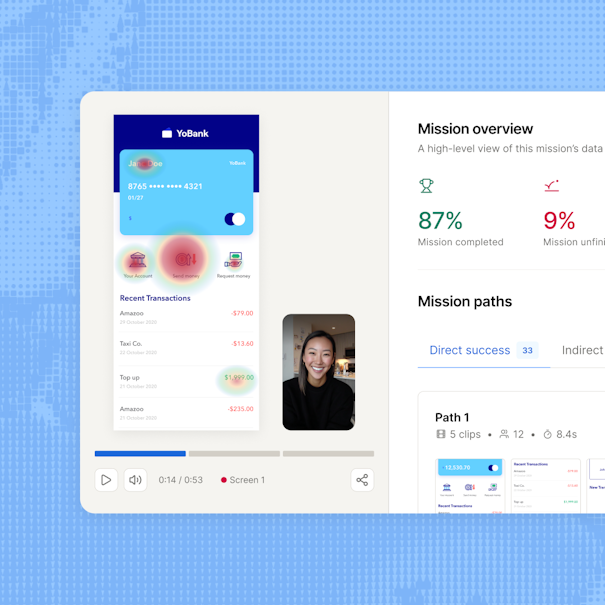
Intuitive & user-friendly
Don't slow down your research workflows. Maze is an easy-to-use platform whose tests can be carried out on any device, offering a breadth of research methods that anyone in your team can quickly learn to put live.
Maze vs. Dscout: Takeaways
Choosing between Maze and Dscout depends on your team’s research needs, workflow, and vision.
Dscout offers a multi-method environment for longitudinal diary studies, interviews, unmoderated usability tests, media-rich surveys, and card sorting. Its AI Studio includes an AI moderator that can probe participant responses and ask follow-up questions, alongside automated video transcription and a natural language repository chat that surfaces cited video clips. The platform also supports global recruitment through its native Scout panel and third-party partner panels. However, scaling studies internationally via these external panels strips away its unique video-audition screening capabilities and advanced conditional questionnaire logic.
Maze is designed for teams that need a complete suite of UX research tools and methods. Maze also includes live website testing, tree testing, AI-moderated interviews, and prototype testing for AI-generated designs. Maze panel supports participant recruitment, while the Maze AI suite automates key steps—like question optimization and research analysis. Maze MCP extends that workflow into tools like Claude, ChatGPT, Copilot, and Cursor, allowing teams to explore studies and access research insights directly within the AI tools they already use.
For product teams focused on speed, flexibility, and continuous discovery, Maze provides a cost-effective, end-to-end research solution. If longitudinal studies are your focus, opt for Dscout.
Maze vs. Dscout frequently asked questions
Can Maze do moderated testing?
Can Maze do moderated testing?
Yes! Maze supports moderated testing through Interview Studies and live prototype walkthroughs. Teams can host real-time sessions via integrations with Zoom, Google Meet, or Microsoft Teams, and scale automatically using Maze’s AI moderator, which plans, runs, and analyzes interviews 24/7.
Moderated sessions can include live prototype or concept validation tests, enabling researchers to observe participants, ask contextual follow-ups, and capture behavioral insights in real time—all within Maze.
Does Maze have advanced AI functionalities?
Does Maze have advanced AI functionalities?
Maze AI enhances the entire research workflow from planning studies to running them and interpreting results. Maze includes features like AI moderator for automated interviews, Perfect Questions for bias-free question design, dynamic follow-ups for contextual probing, and automated themes for instant summaries. It also supports AI prototype testing through integrations with Figma Make, Bolt, and Lovable.
Can I switch from Dscout to Maze?
Can I switch from Dscout to Maze?
Yes, Maze’s user-friendly research and testing platform is a great Dscout alternative. Maze makes it easy to transition from other tools, with resources to help migrate your workflows.
Which platform is better for remote user research: Maze or Dscout?
Which platform is better for remote user research: Maze or Dscout?
Maze is designed for remote, end-to-end user research. Teams can run moderated, unmoderated, and AI-moderated studies, including prototype testing, live website testing, and mobile testing. And with Maze panel, researchers can recruit participants from over 150 countries. Combined with integrations for Zoom, Teams, and Google Meet, Maze makes running and analyzing global remote research seamless, fast, and scalable.
Dscout is designed for qualitative, longitudinal user research, such as field studies, diary studies, and interviews. While it lacks some of the quantitative research methods offered by Maze, it’s a great solution for teams looking to study users over time. It also has a comprehensive suite of AI capabilities and participant recruitment options.
Which platform allows for a wider variety of user research methods: Maze or Dscout?
Which platform allows for a wider variety of user research methods: Maze or Dscout?
Maze supports a wider variety of user research methods, especially for teams running product and usability research across different stages of development. Teams can run prototype tests, live website tests, live mobile tests, surveys, card sorting, tree testing, interview studies, AI-moderated interviews, 5-second tests, and first-click tests.
For recruitment, Maze gives teams access to Maze panel for external participants and in-product prompts for recruiting users directly from live websites or browser-based products. Maze also supports prototype testing with Figma and Axure, plus AI-generated prototypes from tools like Figma Make, Lovable, Replit, and Bolt.