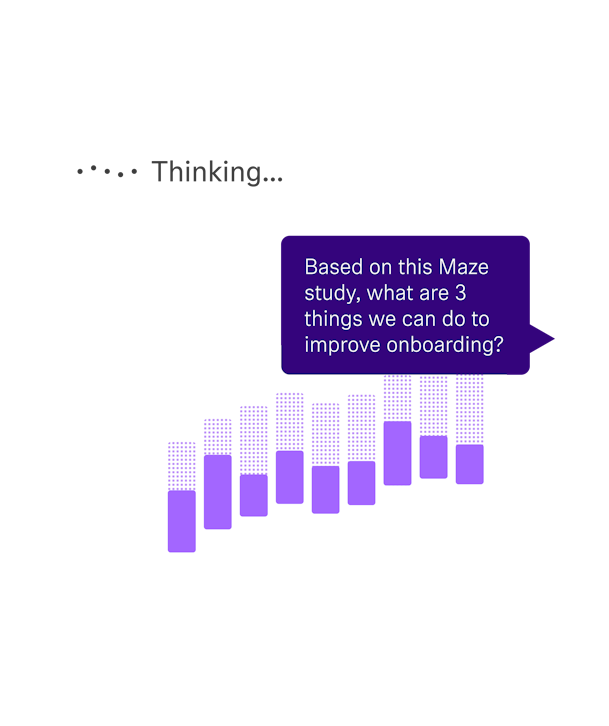










Today, we’re launching a new way to bring Maze research directly into the AI tools teams already use, such as Claude, ChatGPT, and Cursor, so teams can ask questions and get answers in the moments that matter.
AI has changed how people work. Instead of digging through repositories and dashboards, people are using it to move faster. But without an easy way to bring research into active work, decisions get made with whatever’s at hand. Often, the answer already exists somewhere in the organization, it just doesn’t reach the conversation.
Maze MCP puts research back into the moment it’s needed.
Building a system of learning with Maze MCP
Model Context Protocol (MCP) is an open standard that lets AI tools securely connect to other systems and pull in live data, so information can be used directly where it’s needed—without manual exporting or copying between tools.
For teams using Maze, that means studies, transcripts, and session data can now move more easily into the work itself. Research isn’t something that gets pulled in at the end of a process; it stays connected as ideas become decisions.
This release is another step towards building a system of learning.
The system of learning is how we describe the way teams connect what they learn with what they do next. Instead of research sitting in one place and decisions happening somewhere else, it creates a continuous loop between insight, discussion, and action.
Maze’s MCP plays a role in strengthening that loop—helping ensure that learning doesn’t stay isolated in research tools, but flows into the spaces where strategy, product direction, and prioritization happen.
MCP that works across your team

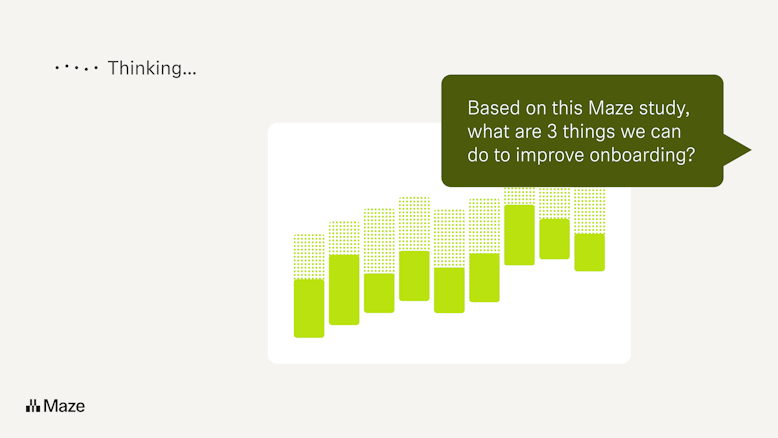
When research is available inside the tools teams already use, it becomes easier to bring customer understanding into everyday work. Instead of being something you need to go and find, research shows up in the moments where decisions are being shaped.
That might look like:
- A product manager exploring a new feature and pulling in relevant findings from usability studies before defining requirements
- A UX designer reviewing a journey and bringing in user feedback to understand what worked and what needs improving
- A marketer preparing a campaign and identifying the language customers naturally use to help shape their messaging
- A researcher seeing the impact of their work extend beyond a readout, as teams bring existing findings into decisions when they need them
In each case, research becomes easier to use in the flow of work. While AI helps surface insights in the moment it’s needed, it doesn’t decide what matters. That still sits with people.
📖 When AI takes on more of the execution, the researcher's role becomes more defined. The next research skill: Knowing when to use AI with confidence, explores where human involvement still changes the outcome.
Bringing research into everyday decisions
Maze began with the belief that teams should have easier access to research, so decisions can be driven by real customer understanding. Over the last eight years, that’s evolved into helping researchers move from producing insights to influencing how decisions are made.
With 69% of researchers now using AI in some part of their workflow, it’s clear the role of research isn’t disappearing. Instead, teams are rethinking how AI fits into the process—when it helps speed things up, and where human judgment takes the lead: framing the right questions, interpreting nuance in context, and standing behind a clear point of view.
Maze MCP helps research show up where decisions are being made, not just where it’s stored.