










AI-Moderated Research: A Research Grade Guide
AI moderation automates user interviews so research teams can scale without sacrificing quality. Learn what it is, how it works, and when to use it.
Chapter 1
An introduction to AI moderation
TL;DR
AI moderation uses artificial intelligence (AI) to conduct structured interviews at scale following your research objectives and interview guide. It is well-suited for studies where you need consistent, comparable conversations across many participants, for example, when validating concepts, testing messages, or checking usability flows.
Maze’s AI moderator enables teams to run AI-moderated interview studies while keeping researchers in control of research goals, depth, and consent. Maze provides traceable transcripts with privacy and data safeguards to ensure humans are always in the loop.
Two in three product professionals say demand for research has increased, with teams needing user insights earlier, more often, and across more decisions.
Interviews remain one of the richest ways to understand user behavior, like what users think, feel, and need, but they’re hard to scale without adding more time, headcount, or operational complexity. That’s why almost 21% of teams are already using AI-moderated interviews to support faster feedback loops and experimentation.
In this guide, we look at what AI moderation is, how it helps create scalable research workflows, and where human review is still essential to protect insight quality and the user experience.
What is AI moderation?
AI moderation uses artificial intelligence (AI) systems to run research interviews without a human moderator in the room. These systems are powered by large language models (LLMs), a form of generative AI built using machine learning and natural language processing (NLP). They are trained specifically to guide research conversations, ask follow-up questions, and capture user feedback in a structured way.
You share your research goals, a discussion guide, and rules for how deep to probe. The AI moderator uses that guide to shape every conversation. It adapts in real time based on what participants say, follows up on vague answers, and maintains the same tone and structure across every session.
However, an AI moderator can't notice subtle cues like long pauses, changes in tone of voice, or when someone sounds confused but doesn’t say so out loud. That's where human judgment still matters—and where the two approaches differ most.
How are AI-powered interviews different from traditional moderated research?
AI moderation | Human moderation | |
|---|---|---|
Who runs the interview | An LLM trained for research conversations | A human researcher (moderator) |
Scale of interviews | Runs hundreds of interviews simultaneously | One interview per researcher at a time |
Response consistency | Same probing logic and tone applied to every participant | Varies based on moderator experience and style |
Real-time adaptation | Follows your research guide, probes on short answers | Reframes questions, chases unexpected responses |
Reading participants | Processes language only—no tone, body language, or emotion | Picks up on tone, hesitation, and body language |
Human review | You review outputs after—AI flags themes and sentiment | Researcher is present throughout the session |
Workflow fit | Asynchronous—participants complete it on their own schedule | Synchronous—both parties must be available at the same time |
Best for | Structured feedback, validation studies, scaled discovery | Exploratory research, sensitive topics, high-stakes decisions |
When does AI moderation make sense?
AI moderation works best when your research question is already defined. It’s ideal for when you need the same structured conversation run across a large number of participants—and you need it fast.
Strong fit for AI-moderated research | Strong fit for human‑moderated research | |
|---|---|---|
Research goal | You’re validating a clear hypothesis or comparing known options | You are exploring a problem space and do not yet know what matters |
Conversation shape | You can express what you need as a structured guide with clear questions and follow‑ups | You expect to reframe questions, skip some, and add new ones during the session |
Scale and workflows | You want an AI-powered, automated workflow that can run many interviews in parallel and plug into your existing research tools | You’re okay with fewer sessions, scheduled one by one, because depth matters more than automation |
Sample size | Teams often run between 20 and 100+ AI-moderated interviews in a single study and 15–30 per segment when budget allows | 8–15 interview range per study or per segment because of time and cost limits |
Topic type | Product feedback, task flows, and other user experience questions that are safe to ask with an AI tool | Sensitive topics, or research with vulnerable participants, where a human moderator should manage emotion and risk |
Signal you care about most | Comparable answers at scale, fast turnaround, and a consistent participant experience | Stories, context, and subtle shifts in tone or body language that change how you interpret what was said |
Role of human review | You’re comfortable doing human review to check AI outputs and moderation decisions | You want the human moderator making judgment calls in real time during the session |
What makes AI moderation research grade?
A research-grade AI moderator is an autonomous conversational agent engineered specifically to conduct high-quality qualitative research interviews, focus groups, or user testing at scale.
Maze’s AI moderator is built for that job. It keeps researchers in charge of the study setup, makes every transcript and theme easy to trace back to what participants said, and builds privacy and human review into the research process.
Let’s look at what research-grade AI moderation means in practice, step by step.
Researcher controls goals, guide, and parameters
The researchers define what the study should learn, how the conversation should run, and which guardrails keep the session valid and safe.
Once goals are set, the AI uses them as its anchor. It checks whether each answer actually helps answer the research question. If a response is shallow or off‑track, the moderator can ask a clarifying follow‑up or gently steer the conversation back to the core topic.
The discussion guide then acts as the execution framework. It tells the moderator what to ask, how open each section should be, and how to treat digressions. On top of that, researchers configure concrete parameters that shape how the system behaves in the room.
Here’s a quick look at how researchers typically control goals, guides, and parameters:
What the researcher controls | How it affects research quality | |
|---|---|---|
Study goals | Specific learning objectives for each question or section | Keeps follow‑ups focused on what the team actually needs to know |
Discussion guide | Question order, probe prompts, transitions, and closing instructions | Makes interviews comparable across sessions while still allowing adaptation |
Probe depth | How many follow‑up questions the AI may ask on a topic | Prevents over‑probing and participant fatigue |
Stop conditions | Rules for when the moderator should move on from a line of inquiry | Keeps conversations efficient and avoids getting stuck in low‑value areas |
Language and tone | Neutral wording, reading level targets, and banned leading phrases | Reduces bias and keeps questions accessible to all participants |
Tangent handling | Guidance on when to explore tangents vs. return to the main topic | Captures unexpected insight without derailing the study goals |
With Maze's AI moderator, the researcher is still in charge of the study. You can edit or remove goals and adjust the intro, closing, and key questions before your study goes live.
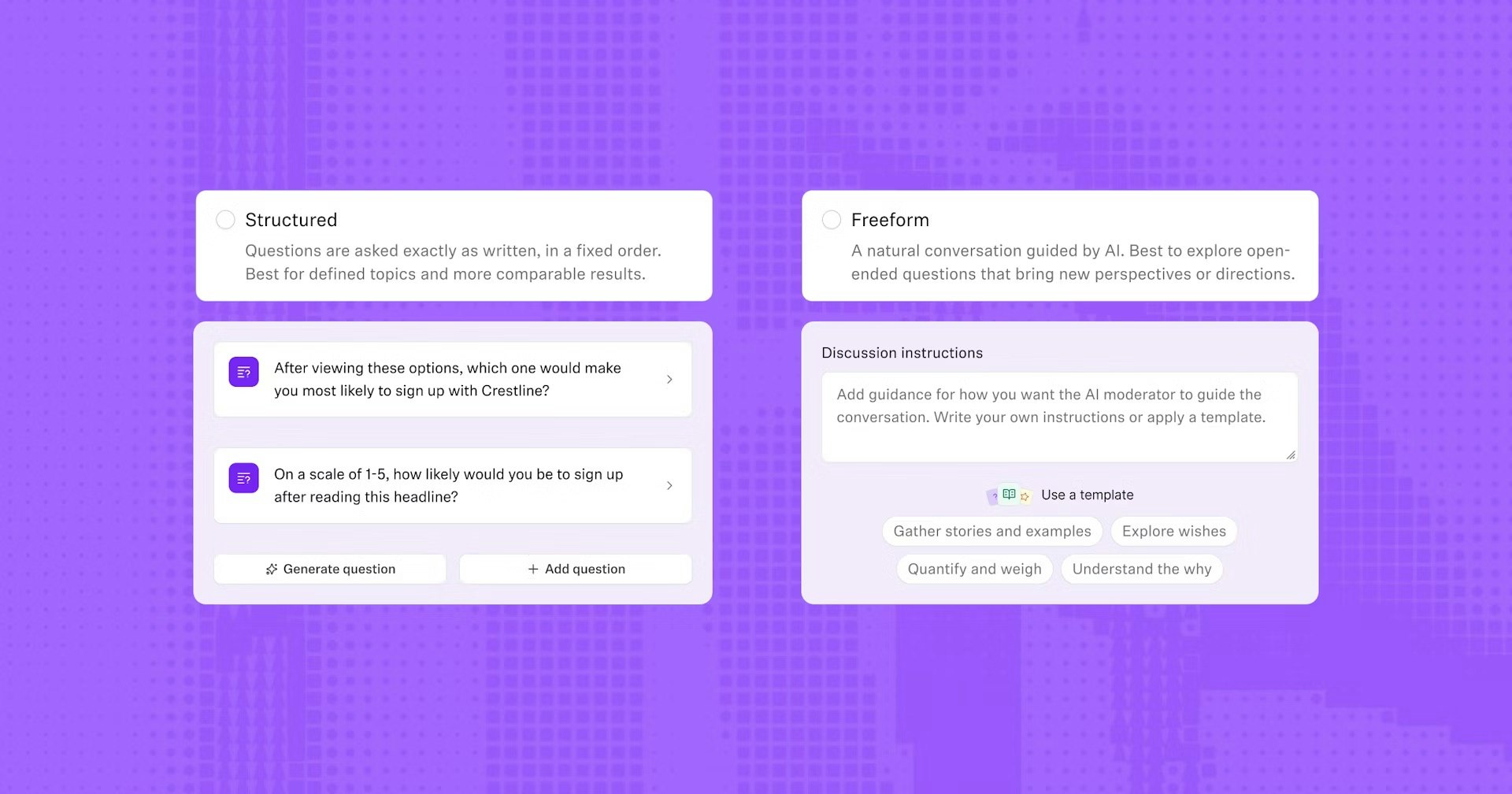
For each goal, you also decide how the conversation should run. Maze gives you two styles to choose from:
- In a structured goal, the AI moderator asks the questions as written and in a set order, which keeps the flow consistent across every session.
- In a freeform goal, the AI moderator can rephrase, change the order, and ask its own follow‑up questions, as long as it stays within the learning goal you defined. This gives you more flexibility and depth on that topic.

You can set separate languages for how the AI moderator speaks to participants and how Maze AI analyzes the recordings, choosing from English (US and UK) plus a range of European and global languages, including French, German, Spanish, Portuguese (European and Brazilian), Mandarin Chinese, and more.
Consistent probing depth, no fatigue
In traditional interviews, probing depth often depends on the individual moderator and their energy that day. After a few sessions, people naturally get tired, shorten follow‑ups, or unconsciously steer answers toward their own expectations.
With AI‑moderated research, probing depth is set as a parameter. Teams define how many follow-up questions are allowed on a topic and what a ‘good enough’ answer looks like, so the moderator knows when to dig in and when to move on.
Since the interview is automated with AI, that behavior doesn’t fade as you add more sessions. The 5th interview and the 150th are probed with the same level of energy and attention. That’s where it differs most from human‑only moderation, where fatigue, time pressure, or cognitive bias can creep in as the day goes on.
During the user interview sessions, the AI moderator listens to what participants say and picks up key elements in their answers. It uses those cues to generate relevant follow‑up questions in real time, so people are prompted to explain, clarify, or expand.
And with Maze, you can pick a conversation depth setting for each goal:
- Shallow (about 3 minutes)
- Moderate (about 5 minutes)
- Deep (about 8 minutes)
This tells the AI moderator how long to stay on that topic and how much to probe before moving on.
See it in action here
Participant transparency
Research‑grade AI moderation treats informed consent and clear disclosure as non‑negotiable parts of the process. Participants have a right to know who—or what—they’re talking to. Once an AI‑moderated study is live, participants should see upfront that they’re speaking with an AI, what will be recorded, and how their answers will be used.
In our Future of Research report, researchers say the need for human review is a key challenge (73%), along with trust and credibility (66%) and AI ethics and privacy concerns (43%).
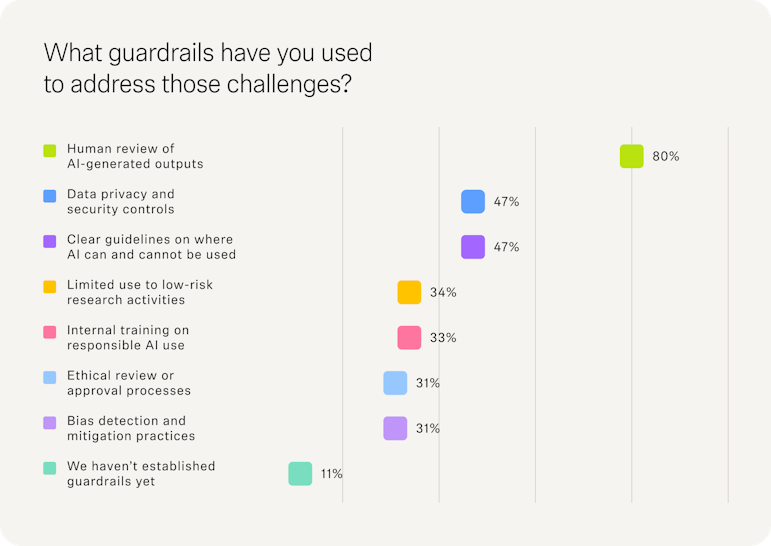
To keep standards high, 80% of teams now build human review into their workflows, and many add data privacy controls and clear rules on where AI can and cannot be used.
Being upfront with participants about AI use and data brings those guardrails into the session itself. It makes the interview feel informed and respectful instead of like a black box run entirely by AI.

Traceable transcripts, quotes, and themes
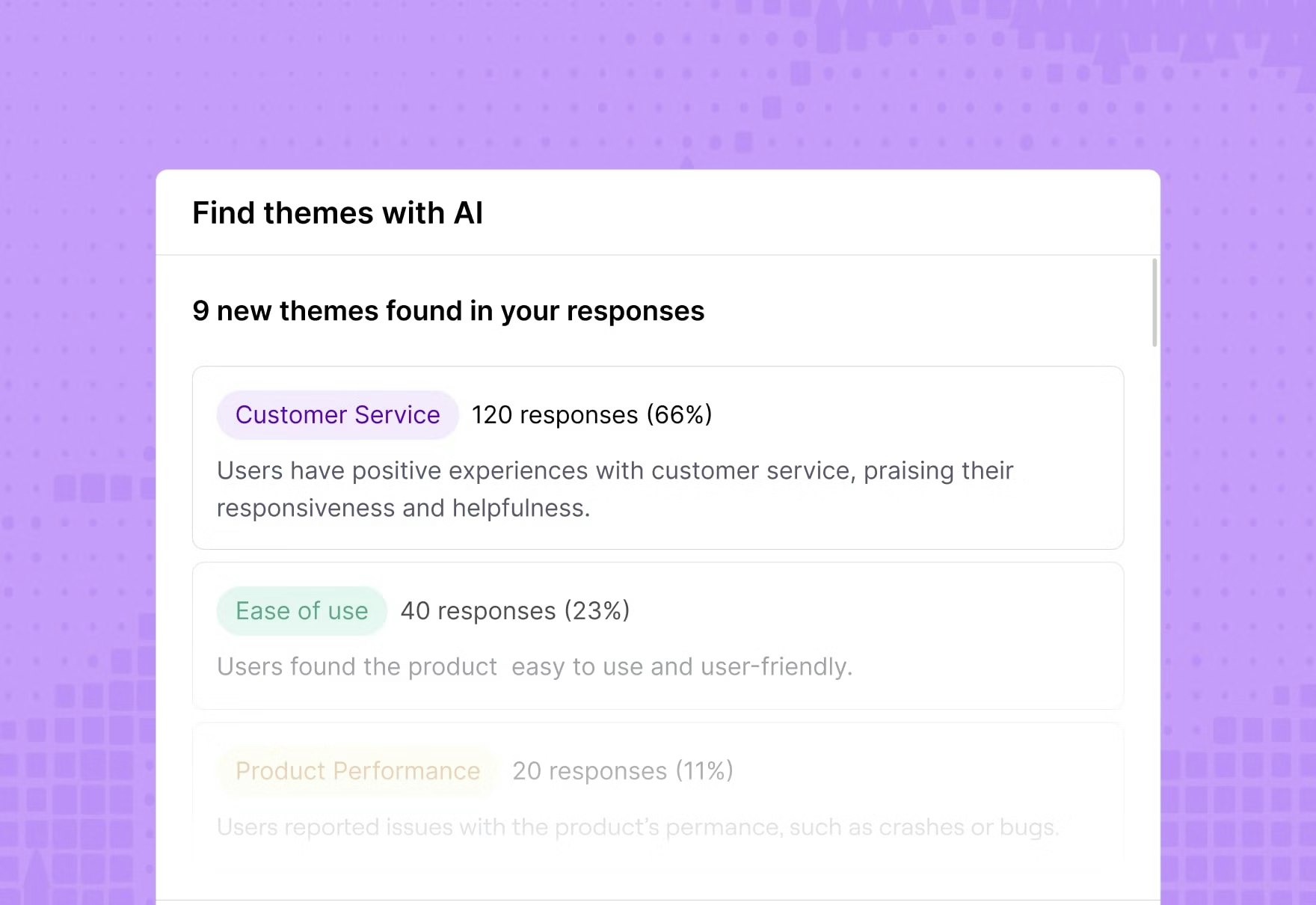
Most modern AI‑assisted analysis tools now structure outputs so that themes come with supporting verbatim quotes and timestamps. Researchers can click from a theme or summary back to the raw transcript, check the surrounding context, and confirm that the wording and tone match what participants said.
This kind of audit trail prevents accidental ‘hallucinated’ findings. Teams are encouraged to spot‑check a sample of sessions—pulling 15–20 transcripts, for example—to verify that each reported theme and key quote appears in the underlying data and is attributed to the right participant.
Maze AI generates a full transcript and a clear summary of the conversation, so you are never starting analysis from a blank page. When you’re ready to share your findings, Maze helps you move quickly from transcripts to stories. You can scan and filter transcripts, pull out quotes, and turn AI‑generated themes into reports your team can review and refine together.

Privacy and consent that meet research standards
Voice, video, and transcripts from AI‑moderated sessions are still personal under data and privacy compliance laws like the General Data Protection Regulation (GDPR) in the EU and other national or regional privacy frameworks.
Compliance practice often includes three pillars:
- Lawful basis: Choosing and documenting the legal basis for processing (often explicit consent for AI interviews, especially with audio or video)
- Data minimization and retention: Collecting only what is needed, restricting access, and deleting or anonymizing identifiable data once analysis is complete
- Participant rights: Giving people ways to withdraw, request deletion, or access their data in line with local law
Professional bodies and regulators increasingly stress that research‑grade AI must meet the same ethical bar as traditional methods. In practice, that means privacy and consent are designed into the workflow, including consent screens, retention policies, and vendor contracts.
Maze’s AI features, including AI‑moderated studies, are built to respect the same privacy and consent standards researchers use in their practice. Maze doesn’t build or train its own AI models.
It works with providers like OpenAI and Anthropic under terms that ensure data sent through their APIs is not used to train their models or improve their services. Data processed by those providers is retained for a maximum of 30 days, then permanently deleted, and AI features are labeled in‑product so teams can see when AI services are in use.
Participant data is handled with explicit consent. When you recruit through Maze’s integrated panels, consent is obtained when people join the panel provider and accept its terms of service, which explain how their data may be used in research.
These controls sit on top of Maze’s broader security and compliance framework. The platform is built on secure infrastructure, backed by dedicated privacy and security policies, and gives organization and enterprise admins the ability to manage or turn off AI features when legal teams or IRBs require guardrails.

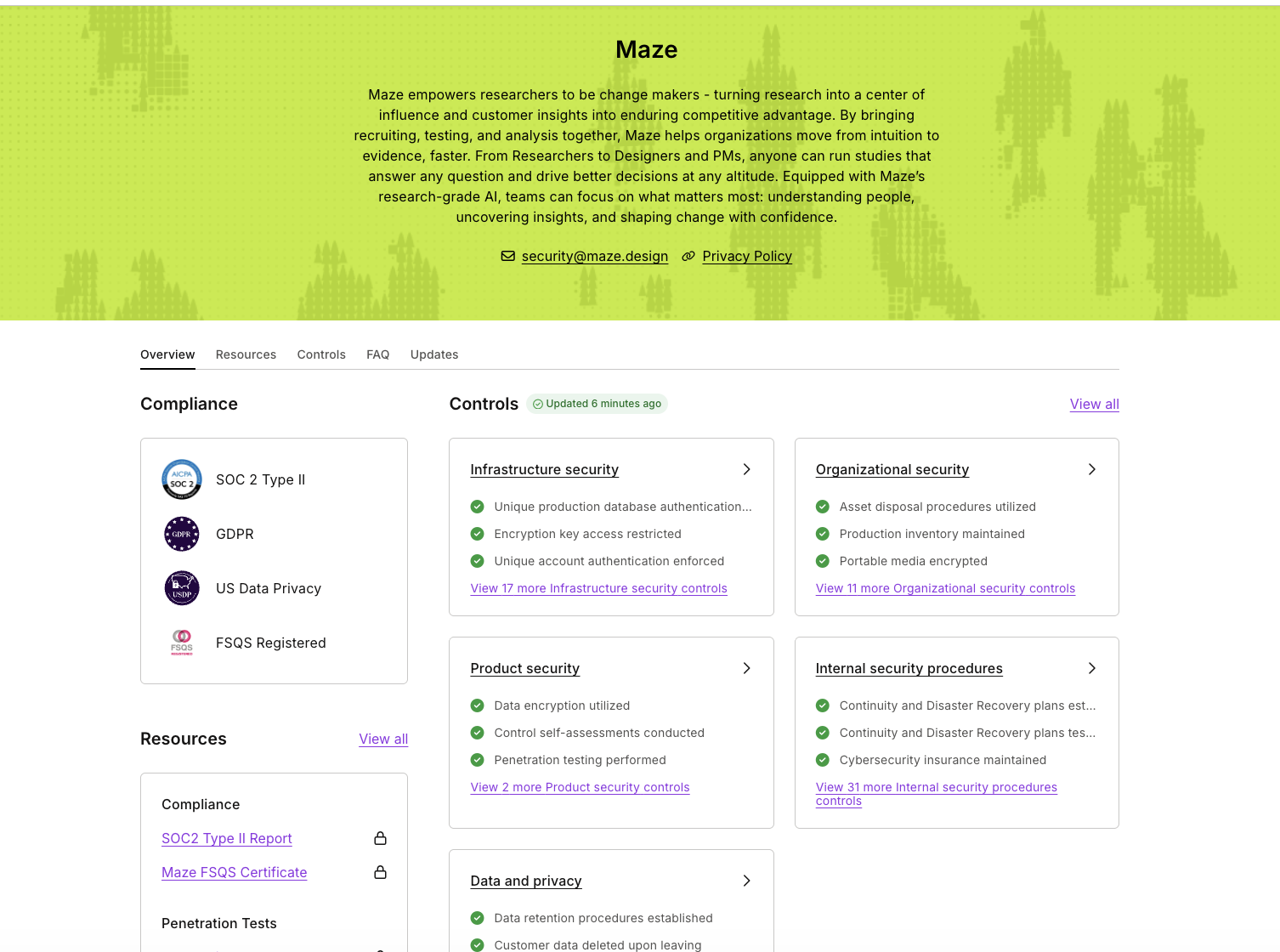
💡 Want to learn more about how Maze AI handles privacy, security, and compliance? Visit the Maze Trust Center and AI privacy documentation for the latest updates.
Up next: Set up your first AI‑moderated study
You’ve now seen what makes AI‑moderated research ‘research grade’—from researcher control and consistent probing to transparency, traceability, and compliance. Next, we’ll walk through how to apply those principles in practice and set up an AI‑moderated study end to end



Frequently asked questions about AI moderation
What is AI moderation in user research?
What is AI moderation in user research?
AI moderation in user research means using an AI agent to conduct interviews or surveys on your behalf. It asks questions, probes for clarity, and captures responses in real time without a human moderator in the room.
On an AI-first user research platform like Maze, AI moderation runs structured conversations based on your goals and guide, while you have control over designing the study and interpreting the patterns in what people say.
How is AI moderation different from automated surveys?
How is AI moderation different from automated surveys?
Automated surveys present fixed questions in a set order and don’t react to what people say, while AI moderation runs a live conversation. It can rephrase, ask follow-ups, and change depth based on each answer, giving you richer, interview‑style context alongside the structured data you’d typically get from a survey.
When should I use AI moderation instead of a human moderator?
When should I use AI moderation instead of a human moderator?
AI moderation is best for when you need many consistent conversations quickly, across time zones or languages, and you have a clear guide and goals. A human moderator is still better for very complex, political, or high‑stakes topics where you need in‑the‑moment judgment.
Can AI moderation produce the same quality insights as human-moderated interviews?
Can AI moderation produce the same quality insights as human-moderated interviews?
AI moderation can match human‑moderated quality for well‑scoped topics with clear questions, because it stays consistent, avoids fatigue, and can probe based on your instructions. It still relies on human review to check transcripts, refine themes, and decide what findings matter for the business, so it is a partner, not a replacement.
How do participants experience AI-moderated interviews?
How do participants experience AI-moderated interviews?
Participants are informed upfront that the moderator is AI and that their session may be recorded and transcribed, usually as part of the intro and consent language. They then answer questions in a conversational flow by voice or text, at a time that suits them, and the experience feels like a structured interview—just without a human on the other side.
Is AI moderation suitable for sensitive research topics?
Is AI moderation suitable for sensitive research topics?
AI moderation can work for ‘softly sensitive’ areas like product frustration, pricing reactions, or workflow pain points, as long as consent and data handling are clear. For highly sensitive topics, such as health, trauma, discrimination, or anything that could affect someone’s safety or job, a trained human moderator is usually the better choice.